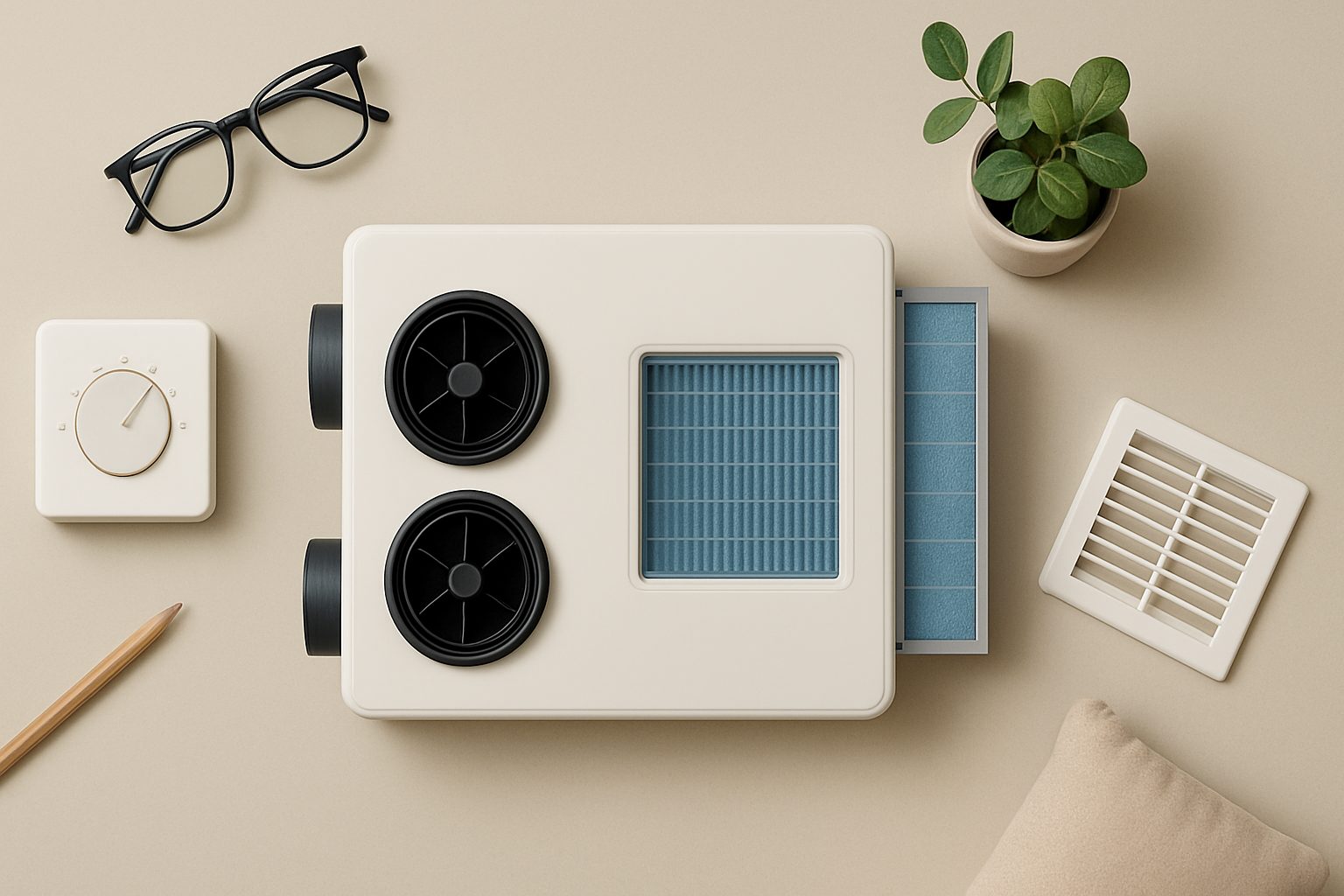
Do You Need Planning Permission for an Air Handling Unit in the UK?
Installing an air handling unit (AHU) can transform comfort in a poorly ventilated home, especially in retrofit situations. But many UK homeowners hit the same concern: will the local planning authority demand permission? The answer depends on several factors, and getting it wrong can mean expensive removal orders.
The Short Answer
Most residential air handling units don't need planning permission under Permitted Development Rights. However, if your home is listed, in a conservation area, or in certain other protected settings, you'll need to apply. Even when planning permission isn't required, Building Regulations approval almost always is.
Understanding Permitted Development Rights
Permitted Development (PD) Rights are a core part of English planning law that allow certain works without formal consent. They're designed to let homeowners make sensible improvements without bureaucratic delay.
For air handling units specifically, the rules sit in Schedule 2, Part 1, Class B of the Town and Country Planning (General Permitted Development) Order. In practical terms, you can usually install an AHU in a residential dwelling without planning permission if it meets these conditions:
- The equipment is for ventilation, heating, cooling, or air conditioning
- It's being installed on or within the external wall of a building
- The size limits are respected (typically 0.6 cubic metres for the plant itself, with certain dimension restrictions)
- It's not a replacement if an original was removed less than two years ago (anti-avoidance rule)
These limits matter. If your unit or associated ducting exceeds the volume threshold, PD Rights don't apply and you need to apply formally.
When You Definitely Need Permission
Listed buildings fall outside PD Rights entirely. Any external alterations—including installing an AHU, running external ducts, or mounting external units—require Listed Building Consent from your local authority. This is a separate application from standard planning permission and comes with stricter scrutiny. Officers will assess visual impact, material compatibility, and whether the work threatens heritage value. Many conservation consultants recommend involving them early; it costs more upfront than guessing wrong.
Conservation areas are stricter than you might expect. Whilst some minor works retain PD Rights, conservation area rules can restrict them. External ducting, visible plant, or large external units often need consent. Each local authority interprets these rules slightly differently, so checking your conservation area appraisal document (available free on your council website) is essential.
Article 4 Directions restrict PD Rights in specific areas. Some councils issue these to protect local character. Check your authority's planning portal to see if one applies to your postcode. If it does, ordinary residential works like this AHU installation might require permission.
Building type matters too. Flats and apartments in converted buildings, buildings that are non-domestic in origin, or properties within strict height/size categories may not benefit from the standard PD exemption. This is worth confirming with your local authority if your home is anything other than a straightforward detached or semi-detached house.
Building Regulations vs Planning Permission
This is where many people get confused. Planning permission and Building Regulations approval are separate things.
Planning permission is about whether the work fits with local development strategy and visual character. Building Regulations are about safety, energy efficiency, and structural soundness.
An air handling unit that doesn't need planning permission will almost certainly need Building Regulations approval. The unit must meet ventilation standards (including noise limits), the installation must be airtight where required, and ducting must be sized correctly. If your AHU is part of a broader retrofit or new-build project, it'll feed into the overall energy performance assessment.
You'll need to notify your Building Control before work starts (or submit plans in advance for larger schemes). The inspector will check during installation and at completion. Skipping this isn't a good idea: it can affect insurance claims, future resale, and your legal liability if something goes wrong.
What to Do If You're Unsure
If your property ticks any of these boxes—it's listed, it's in a conservation area, you've never had it checked for Article 4 Directions, or the AHU unit or ducting seems larger than standard—contact your local planning authority before spending money on installation.
A pre-application enquiry costs £25–£50 and gives you a written answer within 10 working days. It's not binding on the authority, but it's accurate enough to plan around. Describe what you're installing, where, and provide photos or sketches. Planning officers are used to these queries and will tell you plainly if you need permission.
If permission is required, an application typically takes 8–13 weeks. Standard applications cost £206–£462 depending on your type of building. A planning consultant (£200–£500) can be worth the money if the situation is complicated, especially for listed buildings.
Practical Next Steps
Before you commit to an AHU system, establish whether planning permission is needed. If you're retrofitting, check the conservation area appraisal and Planning Portal for Article 4 Directions. If you're unsure, ask your installer—experienced ones have usually navigated this before and can advise.
Then contact your Building Control. They'll outline what inspections and documentation they need. This step is non-negotiable and separate from planning.
Getting these details right means no delays on site, no enforcement action later, and peace of mind that your system is installed safely and compliantly. It takes a bit of upfront admin, but it's far simpler than installing first and apologising later.
More options
- Zehnder ComfoAir MVHR Units (Amazon UK)
- Vent-Axia Sentinel Kinetic MVHR (Amazon UK)
- Mitsubishi Lossnay Ventilation Units (Amazon UK)
- Nuaire Drimaster & Positive Input Ventilation (Amazon UK)
- AHU Replacement Filters & Accessories (Amazon UK)