Heat Recovery Ventilation (HRV) Explained: Benefits for UK Homes
Heat recovery ventilation (HRV), often called mechanical ventilation with heat recovery (MVHR) in the UK, is a system that removes stale air from your home whilst capturing the heat energy from that air and using it to warm incoming fresh air. It's one of the most effective ways to improve indoor air quality and reduce heating costs in modern UK homes, particularly in well-insulated properties where traditional ventilation methods fall short.
How Heat Recovery Ventilation Works
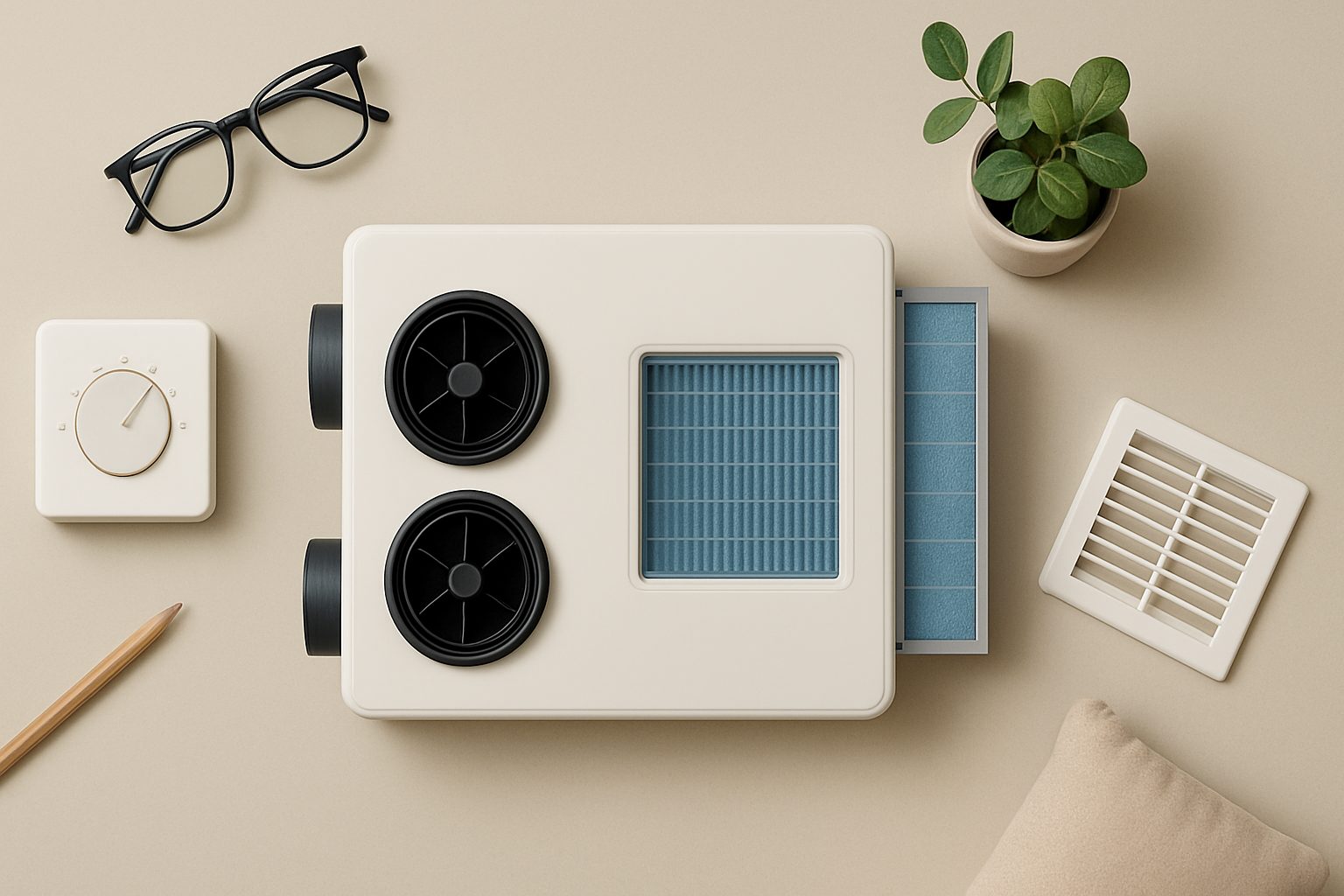
An HRV system operates through three main components: intake vents, a central heat recovery unit, and extract vents distributed throughout your home.
Stale, warm air is pulled from moisture-prone rooms—kitchens, bathrooms, and utility rooms—through ducting into a heat exchanger. Inside this core component, the outgoing warm air passes close to (but doesn't mix with) incoming cold fresh air from outside. This proximity allows heat to transfer between the two air streams through the heat exchanger walls. The warm air exits outside whilst the pre-heated fresh air is distributed to living areas and bedrooms.
Most UK HRV units achieve heat recovery efficiency ratings between 75–92%, meaning they capture and reuse that proportion of heat that would otherwise be lost. This happens automatically and continuously, without you noticing any disruption to comfort or daily routines.
Energy Savings and Heating Costs
This is the primary reason UK homeowners invest in HRV systems. Because incoming fresh air arrives pre-warmed, your boiler or heating system doesn't need to work as hard to maintain comfortable indoor temperatures. In a well-sealed, insulated home—increasingly common following building regulation changes—the savings can be substantial.
The exact figure depends on your current ventilation method, how well your home is insulated, local climate, and heating system efficiency. However, studies in UK homes suggest HRV systems can reduce heating energy consumption by 15–25% compared to using passive ventilation (open windows) or simple extract fans.
This translates to meaningful annual savings on your heating bills, and the system effectively pays for itself over 8–12 years in most cases, depending on your energy prices and installation costs.
Managing Condensation and Moisture
Condensation is a persistent problem in many UK homes, particularly in converted period properties, newer builds with high air-tightness, or homes with limited ventilation. Excess moisture promotes mould growth, damages décor, and compromises air quality.
HRV systems solve this by continuously extracting moisture-laden air from bathrooms and kitchens before it can accumulate elsewhere in your home. By replacing this humid air with dry, fresh air from outside (warmed by the heat exchanger), relative humidity naturally falls. Most homes see a noticeable reduction in condensation within weeks of commissioning an HRV system.
This is particularly valuable in UK homes during winter, when outdoor air is cold and dry, making it easier to maintain healthy indoor humidity levels (ideally 30–50%).
Improved Indoor Air Quality
Beyond temperature and moisture control, HRV systems filter incoming air. Most models include filters rated G3 or G4 (capturing dust, pollen, and larger particles), with some offering activated carbon filters that reduce odours and chemical pollutants.
For households with allergies, asthma, or pets, this makes a noticeable difference. Fresh, filtered air constantly circulates without needing to open windows—which is particularly valuable if you live near busy roads or in areas with high pollen counts.
Types of HRV Systems for UK Homes
Ducted systems distribute air through wall- or ceiling-mounted ducting to multiple rooms. These are most effective in new builds or substantial renovations where running ducting is feasible, and they're the standard choice for whole-home ventilation.
Decentralised units are mounted on external walls and serve individual rooms or zones. These suit retrofit installations in existing homes where extensive ducting is impractical or expensive, though they're less efficient at capturing and reusing heat across the entire property.
Hybrid systems combine HRV with additional features like humidity sensors or demand-controlled ventilation, which ramps air extraction up or down based on actual moisture levels rather than running continuously.
Installation and Maintenance Considerations
Professional installation is essential for HRV systems to perform effectively. Poor ducting layout, air leaks, or inadequate sealing will undermine heat recovery efficiency and may create draughts or noise issues.
Maintenance is minimal but necessary. Filters typically need replacing annually (or more frequently if you have pets or live in a dusty area). Ducting should be cleaned every 5–10 years, and the system should be serviced annually to ensure optimal performance.
Installation costs for ducted systems in UK homes typically range from £3,000 to £8,000, depending on property size, existing structure, and local labour rates. Decentralised units are cheaper to install—£1,500–£3,000 per unit—but cover smaller areas.
Is HRV Right for Your Home?
HRV systems work best in well-insulated, airtight homes where passive ventilation is insufficient. They're less effective in older, draughty properties with air leaks, as the heat recovery efficiency is undermined by uncontrolled air loss elsewhere.
If your home suffers from condensation, you have allergies or asthma, or you're renovating and upgrading insulation, an HRV system is worth serious consideration. The combination of lower heating bills, eliminated condensation, and cleaner air addresses multiple comfort and health issues simultaneously.
For many UK homeowners, HRV represents one of the highest-return investments in building performance—delivering measurable benefits across comfort, health, and energy costs for years after installation.
More options
- Zehnder ComfoAir MVHR Units (Amazon UK)
- Vent-Axia Sentinel Kinetic MVHR (Amazon UK)
- Mitsubishi Lossnay Ventilation Units (Amazon UK)
- Nuaire Drimaster & Positive Input Ventilation (Amazon UK)
- AHU Replacement Filters & Accessories (Amazon UK)